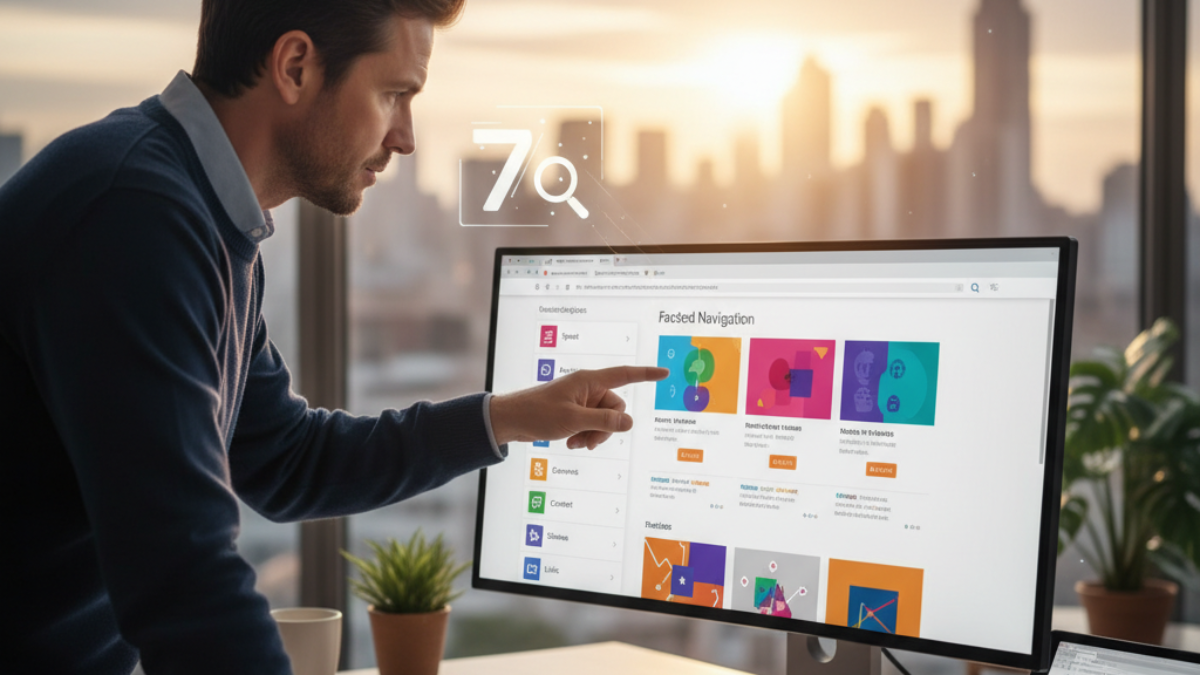
Imagine landing on an e-commerce site with ten thousand products but no way to filter them. You would likely leave within seconds, frustrated by the clutter. This is why faceted navigation is a cornerstone of modern web design, yet it remains one of the most complex challenges for search engine optimization. Learning how to optimize category pages for faceted navigation is essential for any site owner who wants to provide a seamless user experience without sacrificing search engine visibility.
Faceted navigation allows users to narrow down product results based on attributes like size, color, price, or brand. While this is great for shoppers, it can create a nightmare for search engines by generating millions of near-duplicate URLs. If left unmanaged, these pages can dilute your ranking power and waste your crawl budget on low-value content.
In this guide, we will dive deep into the technical and strategic nuances of managing these complex systems. You will learn how to balance user intent with technical SEO requirements to ensure your site remains both crawlable and competitive. By the end of this article, you will have a clear roadmap for mastering your site’s navigation structure.
Understanding the SEO Challenges of Faceted Navigation
Before we explore the solutions, we must understand the core problem. Faceted navigation creates a massive number of URL combinations. For example, a single category like “Men’s Shoes” could have filters for “Size 10,” “Blue,” “Nike,” and “Under $100.” Each combination creates a new URL that search engines might try to crawl.
This leads to a phenomenon known as “index bloat.” When Googlebot encounters millions of filter combinations, it struggles to identify which pages are actually important. This can lead to your primary category pages being outranked by irrelevant filter pages or, worse, ignored entirely. Managing this effectively is a critical part of knowing how to optimize category pages for faceted navigation.
Consider a real-world example from a mid-sized electronics retailer. They realized that Google was indexing 50,000 versions of their “Laptops” page, most of which showed the exact same products in a different order. Their organic traffic was stagnating because the “real” category page was buried under a mountain of duplicate filter URLs. Once they cleaned up their facets, their primary rankings jumped by 40% in three months.
The Problem of Duplicate Content
Duplicate content occurs when multiple URLs show the same or very similar products. In faceted navigation, selecting “Brand: Nike” then “Color: Blue” often shows the same results as selecting “Color: Blue” then “Brand: Nike.” Search engines see these as two different pages with the same content, which can trigger algorithmic penalties or ranking fluctuations.
Crawl Budget Wastage
Search engines assign a “crawl budget” to every website, which is the number of pages a bot will crawl during a specific timeframe. If your site generates thousands of useless filter combinations, Googlebot might spend its entire budget crawling those instead of your new product pages or high-converting blog posts. Efficient e-commerce crawl budget management ensures that search engines focus only on the pages that drive revenue.
Tip 1: Implement Canonical Tags to Consolidate Link Equity
One of the most effective ways to handle duplicate content is through the strategic use of canonical tags. A canonical tag tells search engines which version of a URL is the “master” copy. This is a foundational step when learning how to optimize category pages for faceted navigation because it prevents search engines from indexing every possible filter combination.
When a user selects a filter that doesn’t significantly change the intent of the page—such as “Sort by Price”—the URL should point its canonical tag back to the main category page. This ensures that all the “ranking juice” from those filtered views is concentrated on the primary page. This helps the main category rank higher for broad search terms.
For example, if a user is on `website.com/shoes/` and selects “Sort by Newest,” the resulting URL might be `website.com/shoes/?sort=newest`. The canonical tag for this filtered page should be set to `website.com/shoes/`. This tells Google to ignore the “newest” version for indexing purposes but still allows users to use the feature.
When to Canonicalize to the Main Category Use canonicals for sorting options (price high-to-low, newest, top-rated). Use them when the filter combination does not represent a term people actually search for in Google.
Real-World Scenario: The Fashion Boutique
A luxury fashion boutique used canonical tag implementation for filters to resolve a major ranking issue. They found that their “Red Dresses” filter was competing with their main “Dresses” category. By canonicalizing low-search-volume color filters back to the main category, they stabilized their rankings and saw a 15% increase in click-through rates from the SERPs.
Tip 2: Use Robots.txt to Control Googlebot’s Access
Sometimes, canonical tags aren’t enough, especially for massive sites with millions of URLs. If Googlebot is spending too much time crawling your facets, you may need to block access entirely using your `robots.txt` file. This is a more aggressive but highly effective tactic in the quest of how to optimize category pages for faceted navigation.
By adding a “Disallow” rule for specific URL parameters, you can tell search engines to stay away from certain parts of your site. This is particularly useful for parameters that create infinite combinations, such as price ranges or multiple attribute selections. However, you must be careful not to block pages that you actually want to rank.
A common approach is to allow search engines to crawl single-facet pages (like “Nike Shoes”) but block them from crawling multi-facet pages (like “Nike Shoes Size 10 Blue”). This allows you to capture long-tail search traffic for specific brands while preventing crawl budget waste on hyper-specific combinations.
How to Structure Disallow Rules
Identify the parameters used by your facets (e.g., `?color=`, `?size=`, `?price=`). Decide which parameters add no SEO value. Add a line like `Disallow: /*?price=` to your robots.txt file to block all price-filtered pages.
Tip 3: Master URL Parameter Optimization and Structure
The way your URLs are structured plays a massive role in how search engines interpret your site. Messy, disorganized URLs with long strings of random characters are difficult for both users and bots to understand. If you want to know how to optimize category pages for faceted navigation, you must prioritize clean, readable URL structures.
Instead of using non-descriptive parameters like `?attr1=5&attr2=10`, try to use “slug-based” URLs for high-value facets. For instance, `website.com/shoes/nike/` is much better for SEO than `website.com/shoes/?brand=123`. This tells the search engine exactly what the page is about before it even crawls the content.
However, you shouldn’t do this for every filter. Only turn facets into “pretty” URLs if they target a specific keyword with search volume. For everything else, keep them as standard parameters. This creates a clear hierarchy where the most important pages look like subcategories, and the less important ones look like temporary filters.
Best Practices for Faceted URLs Use hyphens to separate words, not underscores. Avoid repeating the category name in the facet (e.g., `/shoes/blue-shoes/` is redundant; `/shoes/blue/` is better). Ensure the order of parameters is consistent to prevent duplicate URLs (e.g., always brand first, then color).
Real-World Example: The Hardware Store
A large hardware retailer implemented URL parameter optimization by switching their brand filters to sub-folders. Previously, they had `website.com/drills/?m=dewalt`. They changed this to `website.com/drills/dewalt/`. Within two months, they saw a 60% increase in organic traffic for the “Dewalt Drills” keyword because the new URL structure provided a much stronger relevancy signal to Google.
Tip 4: Leverage AJAX to Prevent Unnecessary Indexing
If you want to keep your site fast and your index clean, AJAX is a powerful tool. AJAX (Asynchronous JavaScript and XML) allows the content of a page to update without requiring a full page reload. When a user clicks a filter, the products update instantly, but the URL in the browser doesn’t necessarily have to change in a way that creates a new indexable page.
This is a sophisticated technique for those wondering how to optimize category pages for faceted navigation. By using AJAX, you can provide a high-end user experience while keeping the search engine’s view of your site very simple. Google generally only sees the initial category page, while users get to enjoy a dynamic, fast-filtering interface.
To make this work for SEO, you can use the “History API” to update the URL in the address bar for the user’s benefit without creating a crawlable link that a bot would follow. This is often called “progressive enhancement.” It ensures that the site works for everyone while protecting your SEO integrity.
Pros and Cons of AJAX for Navigation
| Feature | SEO Impact | User Experience Impact |
|---|---|---|
| No Page Reload | Neutral | Excellent – Faster Browsing |
| Limited Crawlability | Good – Prevents Index Bloat | Neutral |
| URL Updating | Variable – Requires History API | Good – Shareable Links |
| Initial Load Time | Can be slower if not optimized | Usually faster after first load |
Scenario: The Electronics Giant
Imagine an electronics site like Best Buy. When you filter by “Screen Size,” the page doesn’t blink; the products just shift. This is AJAX in action. By not generating a new URL for every inch of screen size, they prevent Google from indexing thousands of nearly identical pages, focusing the search engine’s attention on their main “TVs” and “4K TVs” categories.
Tip 5: Implementing “Noindex” Tags for Low-Value Pages
While robots.txt prevents crawling, the `noindex` tag prevents indexation. This is a subtle but important distinction when learning how to optimize category pages for faceted navigation. Sometimes you want Googlebot to crawl a page to discover the products listed on it, but you don’t want that specific filtered page to appear in search results.
A `noindex` meta tag is a directive that tells Google, “You can look at this page, but don’t show it to users in your search engine.” This is perfect for filter combinations that might contain unique products but don’t serve a specific search intent. For example, a “Men’s Extra Large Green Polka Dot Shirt” filter is likely too specific to rank for anything, but you still want Google to find the products on that page.
Using `noindex` is safer than robots.txt in some cases because it allows link equity (PageRank) to flow through the page and reach the product pages. If you block a page via robots.txt, any links pointing to that page are essentially “dead ends” for link equity.
When to Use Noindex For pages with “Thin Content” (only 1-2 products). For pages that are useful for users but have zero search volume according to keyword research.
Practical Scenario: The Jewelry Store
A boutique jewelry store had thousands of pages indexed for “Price Range” filters (e.g., “Necklaces $100-$110”). These pages were clogging up their search results. By applying a `noindex, follow` tag to all price-filtered pages, they removed the junk from Google’s index while allowing Googlebot to continue finding and ranking their individual necklace product pages.
Tip 6: Strategic Internal Linking and Breadcrumbs
Internal links are the “roads” that search engines use to navigate your site. How you link to your facets determines how much authority they receive. If you want to know how to optimize category pages for faceted navigation, you must treat your most important facets as “virtual categories” and link to them prominently.
Breadcrumbs are also vital. They provide a clear path back to the main category and help search engines understand the relationship between different pages. For example: `Home > Shoes > Running Shoes > Nike`. Each of these should be a clickable link. This not only helps users navigate but also reinforces the topical hierarchy of your site.
Avoid “linking to everything.” If your sidebar has 50 filters, and every single one is a hard-coded HTML link, you are diluting your link equity across 50 different pages. Instead, use JavaScript for less important filters so they aren’t seen as links by search engines, while keeping your most important facets (like top brands) as standard HTML links.
Checklist for Internal Linking Ensure breadcrumbs use Schema.org markup for better SERP visibility. Use descriptive anchor text (e.g., “Red High Heels” instead of just “Red”). Monitor your “internal link count” in Search Console to ensure your best pages have the most links.
Case Study: The Auto Parts Dealer
An auto parts retailer improved their SEO by adding “Top Brands” links at the bottom of their category descriptions. Instead of letting Google wander through thousands of filter combinations, they pointed the bot directly to the high-value pages like “Ford F-150 Parts.” This simple change in internal linking led to a 25% increase in the indexation of their brand-specific landing pages.
Tip 7: Optimize On-Page Content for High-Value Facets
Not all facets are created equal. Some facets, like “Nike Shoes” or “Summer Dresses,” are essentially categories in their own right. To fully master how to optimize category pages for faceted navigation, you must treat these high-value facets like landing pages. This means adding unique content, optimized H1 tags, and specific meta descriptions.
If a facet page is indexable, it shouldn’t just be a list of products. It needs a reason to exist in the eyes of Google. Adding a short introductory paragraph about the specific brand or attribute can significantly boost its relevance. This prevents “thin content” issues and helps the page rank for long-tail keywords.
For example, if you have a “Organic Cotton T-Shirts” filter, don’t just show the shirts. Add a small section at the bottom of the page explaining the benefits of organic cotton. This provides unique value that distinguishes the page from the general “T-Shirts” category.
Content Optimization Strategies Dynamic H1 Tags: Ensure the H1 updates based on the selected filter (e.g., “Blue Running Shoes”). Custom Descriptions: If a facet gets a lot of traffic, write a 100-word custom description for it rather than using a generic one.
Real-World Example: The Online Pet Store
A pet supply company noticed they were getting traffic for “Grain-Free Dog Food.” They decided to make this facet indexable and added 200 words of expert advice on canine nutrition to that specific page. Within a month, that filtered page was outranking their main “Dog Food” category for those specific long-tail searches, leading to a much higher conversion rate.
Monitoring Your Progress with Search Console
Once you have implemented these tips, your work isn’t done. You must monitor how Google is interacting with your site. Google Search Console is your best friend when learning how to optimize category pages for faceted navigation. Specifically, you should look at the “Indexing” report to see if the number of indexed pages matches your expectations.
If you see a sudden spike in “Excluded” pages, it might mean your robots.txt or noindex tags are working. Conversely, if you see millions of pages being “Indexed, not submitted in sitemap,” you likely have a faceted navigation leak that needs to be plugged.
Check the “Crawl Stats” report (found under Settings) to see how many pages Googlebot is crawling per day. If the number is high but your traffic is low, you are wasting crawl budget. After optimizing your facets, you should see the “average response time” decrease and the “total crawl requests” become more focused on your high-value URLs.
Key Metrics to Watch
Total Indexed Pages: Should remain stable and reflect your actual product/category count. Crawl Requests by File Type: Ensure Google isn’t spending too much time on scripts or unnecessary parameters. Search Queries for Filter Pages: Identify which facets are actually driving traffic so you can give them more SEO attention.
How can I tell if faceted navigation is hurting my SEO?
You can tell by checking Google Search Console for “Index Bloat.” If you have 500 products but Google has indexed 10,000 pages, your faceted navigation is likely creating duplicate content. Another sign is if your main category pages are frequently jumping in and out of the search results or being replaced by irrelevant filter pages.
Should I always use canonical tags for my filters?
No, not always. Canonical tags are great for consolidation, but they don’t stop Google from crawling the pages. If your site is very large (over 100,000 URLs), relying solely on canonicals can still lead to crawl budget exhaustion. In those cases, a combination of robots.txt and canonicals is more effective.
Is it better to use “Noindex” or “Disallow” in robots.txt?
It depends on your goal. “Disallow” stops Google from crawling the page, which saves crawl budget. “Noindex” allows Google to crawl the page but keeps it out of the search results, which is better for passing link equity. Most experts recommend “Disallow” for purely technical filters (like sorting) and “Noindex” for filters that have some value but aren’t search-worthy.
Can I let some facets be indexed and others not?
Yes, and this is actually the best practice. You should identify facets with high search volume (like “Brand” or “Popular Colors”) and make them indexable with clean URLs and unique content. All other low-value facets (like “Price” or “Size”) should be hidden from search engines using the methods discussed in this article.
Does faceted navigation affect site speed?
Yes, it can. If your server has to generate a new database query and reload the entire page every time a user clicks a filter, it can be slow. Using AJAX or a fast, search-based database like Elasticsearch can significantly improve the speed of your faceted navigation, which is a positive ranking factor for SEO.
What is the “History API” and why does it matter for facets?
The History API is a technical tool that allows developers to change the URL in the browser’s address bar without a full page reload. This is crucial for faceted navigation because it allows you to give users a shareable URL for their filtered results while using AJAX to keep the experience fast and the search engine’s job simple.
Conclusion: Mastering the Balance of UX and SEO
Optimizing your site’s filtering system is one of the most impactful technical SEO projects you can undertake. Learning how to optimize category pages for faceted navigation requires a delicate balance between providing a powerful search tool for your customers and a clean, efficient structure for search engines. By implementing the seven tips we’ve discussed, you can ensure that your site remains both user-friendly and highly visible in search results.
To recap, we have covered the importance of using canonical tags to consolidate authority and the use of robots.txt and noindex tags to manage crawl budget. We also explored the benefits of AJAX for a smoother user experience and the necessity of clean URL structures for your most important facets. Finally, we discussed the role of internal linking and unique content in turning your best facets into high-ranking landing pages.
The most important takeaway is that you should never leave your faceted navigation to chance. Every URL your site generates should have a purpose. If it doesn’t serve a user or a search engine, it shouldn’t be indexed. Start by auditing your current indexation in Search Console, identify the “leaks,” and apply these expert strategies to reclaim your rankings.
If you found this guide helpful, consider sharing it with your team or subscribing to our newsletter for more deep dives into advanced SEO strategies. The world of e-commerce is competitive, but with a perfectly optimized navigation structure, you will be well ahead of the curve. What is the biggest challenge you’ve faced with faceted navigation? Let us know in the comments below!